


.png)
The DC motors we ordered are rated as 6 Volt motors with a stall current of 5 Amps.These motors were chosen because they provide a stall torque of 376 ounce-inches and an maximum RPM of 294.
We found an H-Bridge design on the following website:
http://www.talkingelectronics.com/projects/H-Bridge/H-Bridge-1.html
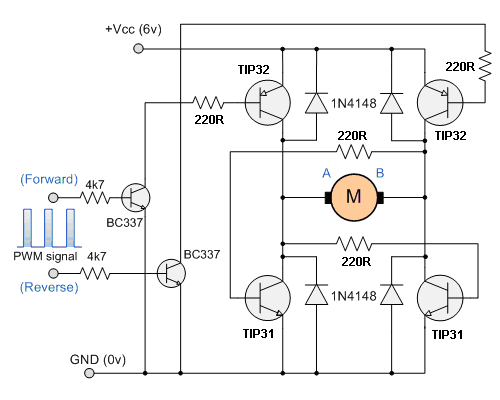


This design powered the motor without a problem, but the issue with this new design was that in order to power the motors off, the input transistors essentially connected the base of the PNP's to ground, but the 10 Ohm resistor connected 5Volts to Ground. This made the design too unreliable, since the resistor was too hot. Experimentally, changing the resistor value to a higher value would make the motors slow down because it caused less voltage across the motor. To fix this, we changed out the PNP transistors with NTE2325's and used the same design as the one found from the website.

Unfortunately, these transistors have a high Vce drop, so the motors were slow. The large voltage drop may have been due to the resistor values chosen, especially since they were not changed. We were going to calculate appropriate values, but luckily an older H-bridge model was found and provided by Gabe.


No comments:
Post a Comment